


Plastic Ban in India: 2026 Guide for Restaurants & Cloud Kitchens

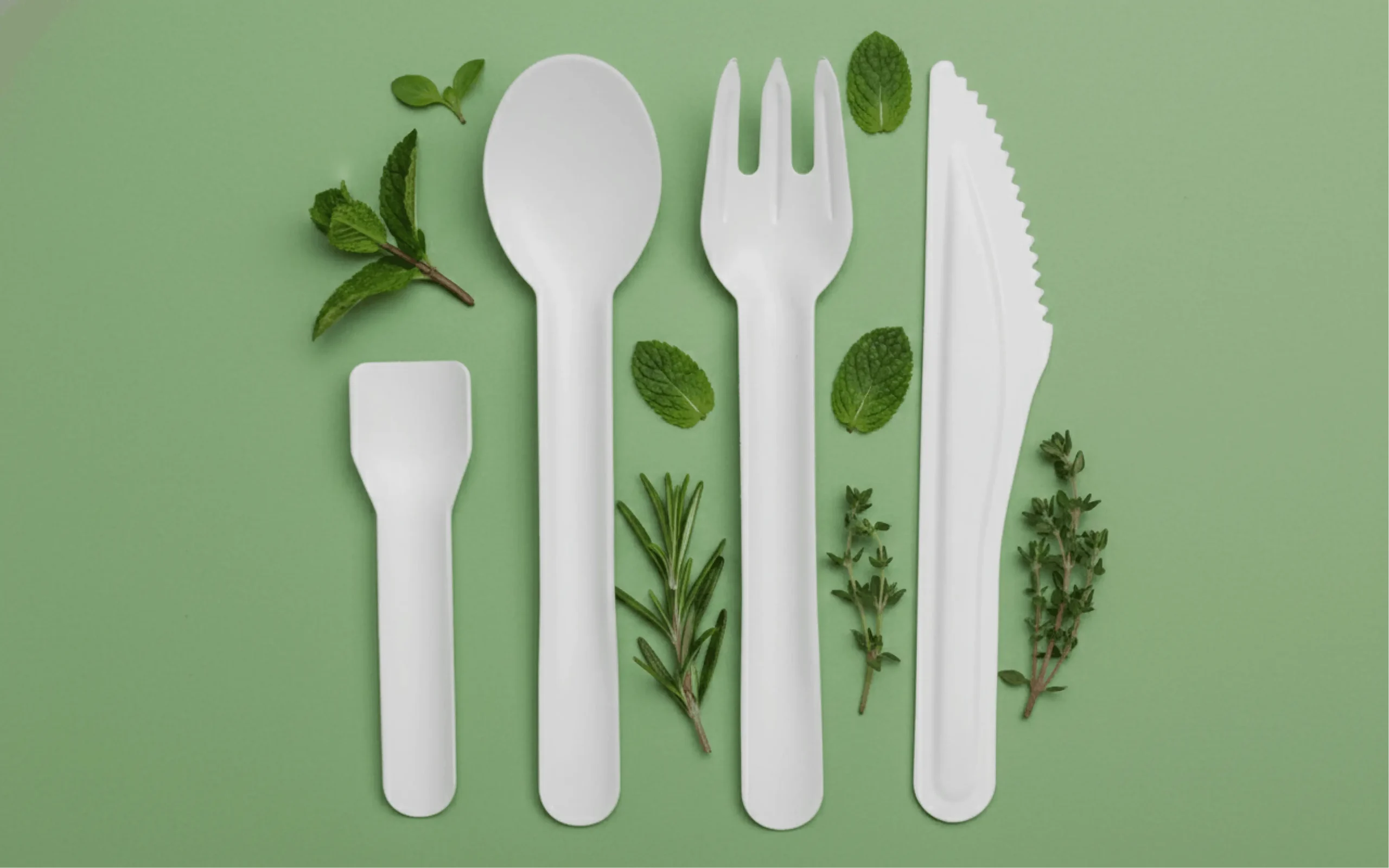
The plastic ban in India has applied to every food business since 1 July 2022: you may not stock, sell or use plastic spoons, forks, knives, plates, cups, glasses, straws, stirrers or trays, and plastic carry bags must be at least 120 microns thick. The legal basis is the Plastic Waste Management (Amendment) Rules, 2021 (G.S.R. 571(E), 12 August 2021). Here is what is banned, who enforces it, what the penalties really are after the 2024 reform, and how restaurants, QSRs (quick-service restaurants), caterers and cloud kitchens can stay compliant.
Last checked against official notifications: October 2026.
Key takeaways
- Plastic cutlery, plates, cups, glasses, straws, stirrers, trays and sweet-box film have been banned since 1 July 2022, including their use.
- Plastic carry bags must be at least 120 microns thick, and non-woven plastic bags at least 60 GSM (grams per square meter).
- Since 1 April 2024, a breach can cost ₹10,000 to ₹15 lakh under the Environment (Protection) Act, plus local fines, seizure and license cancellation.
- The “QR codes from July 2025” rule is an optional labeling route for packaging companies, not a duty for restaurants.
- Wooden, plain paper, bagasse and edible cutlery are outside the ban. Compostable plastic needs a Central Pollution Control Board (CPCB) certificate.
What exactly is banned under the plastic ban in India?
Since 1 July 2022, nobody in India may manufacture, import, stock, distribute, sell or use the single-use plastic items on the central list, including polystyrene (thermocol) versions.
| Item | Banned since | Applies to restaurants? | Notes |
|---|---|---|---|
| Plastic spoons, forks and knives | 1 July 2022 | Yes | Includes delivery. Certified compostable versions are exempt. |
| Plastic plates, cups and glasses | 1 July 2022 | Yes | Includes thermocol plates and cups. |
| Plastic straws and stirrers | 1 July 2022 | Yes | Includes drink straws. |
| Plastic trays | 1 July 2022 | Yes | Same clause as plates and cups. |
| Film around sweet boxes | 1 July 2022 | Sweet shops | Also film around invitation cards and cigarette packets. |
| Plastic ice-cream and candy sticks | 1 July 2022 | Dessert brands | No compostable exemption. |
| Thermocol for decoration | 1 July 2022 | Caterers, decorators | No compostable exemption. |
| Plastic or PVC banners under 100 micron | 1 July 2022 | Outlet promotions | Thicker banners are not listed. |
| Plastic ear-bud sticks, balloon sticks and flags | 1 July 2022 | Rarely | Listed for completeness. |
| Plastic carry bags under 75 microns | 30 September 2021 | Yes | Up from 50 microns. |
| Plastic carry bags under 120 microns | 31 December 2022 | Yes | The current minimum. |
| Non-woven plastic carry bags under 60 GSM | 30 September 2021 | Yes | Fabric-like plastic bags. |
In plain words, the minimum thickness of a plastic carry bag rose from 50 to 75 microns on 30 September 2021 and to 120 microns on 31 December 2022. Certified compostable carry bags are exempt from the thickness rule.
Because use is banned too, handing a plastic spoon to a diner or packing one with a delivery is a breach. Plastic packaging that is not on the list, such as most takeaway containers, is not banned centrally. It falls under extended producer responsibility (EPR), which makes producers, importers and brand owners pay to collect and recycle it.
What does the law say in plain language?
In plain language, nobody may make, import, stock, distribute, sell or use the listed items, carry bags must meet thickness and labeling rules, and packaging companies must pay to collect what they sell. The duties sit in the Plastic Waste Management Rules, 2016, under the Environment (Protection) Act, 1986, as amended by:
- G.S.R. 571(E), 12 August 2021: the single-use ban and carry-bag thickness.
- G.S.R. 133(E), 16 February 2022: EPR guidelines for plastic packaging.
- G.S.R. 522(E), 6 July 2022: environmental compensation for anyone breaking the rules.
- G.S.R. 201(E), 14 March 2024: certificates and labels for compostable and biodegradable plastics.
- G.S.R. 73(E), 23 January 2025: optional QR-code labels and penalties under section 15.
- G.S.R. 237(E), 31 March 2026: local bodies as enforcement authority, plus revised recycled-content and reuse rules.
Who enforces the ban?
Your local body enforces the ban against users and sellers: since 31 March 2026 the rules name the municipal corporation or other local authority as the enforcement authority for banned items, and the panchayat in rural areas. State pollution control boards handle manufacturers and recyclers. By July 2024, national campaigns had made about 8.5 lakh inspections, found about 3.45 lakh violations, imposed about ₹19 crore in fines and seized roughly 1,950 metric tons of plastic, according to the environment ministry.
Does EPR apply to my restaurant?
Usually not: EPR duties fall on producers, importers and brand owners of plastic packaging, and brand owners that are micro or small enterprises under the MSMED Act, 2006 are excluded. A larger chain that sells food in plastic packaging under its own registered brand should check whether it must register on CPCB’s EPR portal.
Which states have stricter plastic rules?
Many states go further than the central list: by July 2022, 34 states and union territories had their own complete or partial bans, according to the environment ministry, so follow your state’s rules too.
| State | Order and date | What it adds for food businesses |
|---|---|---|
| Maharashtra | Notification of 23 March 2018, amended 15 July 2022 and 30 November 2022 | Plastic and thermocol disposables, including food containers used in hotels. Since July 2022, also plastic-coated or laminated paper and aluminum plates, cups, glasses, forks, bowls and containers. Compostable items need CIPET (Central Institute of Petrochemicals Engineering and Technology) and CPCB certificates. |
| Tamil Nadu | G.O. (Ms) No. 84, 25 June 2018, in force 1 January 2019 | “Use and throwaway” plastics of any thickness, including food-wrapping sheets, plates, plastic-coated tea cups, tumblers, water pouches and straws. |
| Karnataka | Notification of 11 March 2016 | Plastic and thermocol cups, plates, spoons, cling film and sheets, and carry bags including compostable ones. |
| Uttar Pradesh | Notification of 15 July 2018 | Plastic or thermocol cups, bowls, containers, tumblers, glasses and plates. |
| Kerala | Government orders, 2019 to 2020 | Single-use plastic and carry bags, including compostable carry bags. |
The Karnataka, Uttar Pradesh and Kerala entries come from the ministry’s July 2024 state list. Confirm current rules with your state pollution control board before you buy.
What are the penalties now?
Since 1 April 2024, breaking the plastic rules attracts a civil penalty of ₹10,000 to ₹15 lakh per contravention under section 15 of the Environment (Protection) Act, plus ₹10,000 for each day it continues.
The Jan Vishwas (Amendment of Provisions) Act, 2023 replaced the old criminal provision from 1 April 2024. An adjudicating officer fixes the amount after a hearing, appeals go to the National Green Tribunal, and prison (up to three years) is possible only if a penalty is not paid within 90 days. The “₹1 lakh fine and possible imprisonment” still quoted online is the outdated 1986 wording.
| Level | Who acts | What you can face |
|---|---|---|
| Central law (section 15) | Adjudicating officer | ₹10,000 to ₹15 lakh per contravention, plus ₹10,000 a day while it continues. |
| Environmental compensation | Local body | At least ₹2,000, ₹5,000 and ₹10,000 for a commercial establishment’s first, second and third violation, plus seizure and possible license cancellation. |
| State laws and city bye-laws | State government, municipal corporation | Fines set locally, sometimes above the CPCB minimums. |
The local minimums come from CPCB’s environmental compensation guidelines (August 2024), and cities that already charge more keep their higher fines.
Legal note
This guide is general information, not legal advice. Rules and local fines vary by state and city and can change quickly, so check with your state pollution control board and your municipal corporation before acting on it.
What changed recently?
Besides the 2024 penalty reform, the main changes for food businesses are tighter rules for compostable plastics, an optional QR-code route for labels, local bodies put in charge of enforcement, and new waste-segregation rules.
- March 2024: compostable items need a CPCB-certified maker, IS/ISO 17088:2021 conformity, the label “compostable only under industrial composting” and, for food contact, Food Safety and Standards Authority of India (FSSAI) compliance.
- July 2025: producers, importers and brand owners may put label details in a QR code, barcode, brochure or unique number. This option does not apply to restaurants as users and does not change what is banned.
- March 2026: local bodies became the enforcement authority, and the recycled-content targets for packaging companies (30% for rigid packaging from 2025-26, rising to 60%) are now waived where food-safety law forbids recycled plastic.
- April 2026: the Solid Waste Management Rules, 2026 require four-way waste segregation, ask restaurants to process wet waste on site where possible, and require three working days’ notice to the local body for events of over 100 people at unlicensed venues.
- September 2026: a CPCB notice said compostable and biodegradable plastics are different. By 23 July 2026, CPCB had certified 371 compostable-plastic makers and no biodegradable-plastic maker.
Is it legal to use wooden, paper, compostable or edible cutlery?
Yes for wooden, plain paper, bagasse and edible cutlery, which are not plastic; compostable plastic cutlery is legal only if its maker holds a CPCB certificate and the product meets IS/ISO 17088:2021 and is labeled correctly.
| Option | Legal under central rules? | What to check |
|---|---|---|
| Wooden cutlery | Yes | Not plastic. Check for plastic film wrapping. |
| Paper cutlery | Yes | Avoid plastic coating or lamination, which Maharashtra and Tamil Nadu ban on some disposables. |
| Bagasse (sugarcane fiber) cutlery | Yes | Not plastic. Ask about any coating. |
| Compostable plastic, such as CPLA (crystallized polylactic acid) | Yes, with conditions | CPCB certificate, IS/ISO 17088:2021 and the industrial-composting label. Maharashtra also needs CIPET. |
| “Biodegradable plastic” cutlery | Only with a CPCB certificate | None issued as of 23 July 2026. |
| Edible cutlery | Yes | It is food, so buy from a licensed food maker. |
For the trade-offs between these alternatives to plastic cutlery, see our comparisons of paper vs wood, paper vs CPLA, paper vs bagasse and paper vs edible cutlery.
A 7-point compliance checklist for your kitchen
Work through these seven checks to clear banned plastic from your kitchen and prove it if asked.
- Audit your stock. Banned items cannot even be stocked, so clear plastic cutlery, straws, stirrers, thermocol plates, ice-cream sticks and sweet-box film from stores and delivery stations.
- Check state and city rules. They can ban more than the central list, such as coated paper cups or plastic containers, and set their own fines.
- Get declarations in writing. “Eco-friendly” is not a category in the plastic rules. Get materials in writing and, for compostable plastic, the CPCB certificate number.
- Look for hidden plastic. Check cutlery, cups and plates for plastic coatings, laminations and wrappers.
- Check carry bags. They must be at least 120 microns and show the producer or brand owner’s name, registration number and thickness, printed or through a QR code. Non-woven bags must be at least 60 GSM.
- Keep purchase records. Invoices, declarations and certificates show an inspector what you buy and when you switched.
- Brief your team. Stop staff and delivery partners adding plastic straws or spoons, and segregate waste into the four streams the 2026 waste rules require.
How to switch without disrupting service
Switch one item at a time, test the replacement in your own dishes, and order before your old stock runs out. Epherware, a paper cutlery manufacturer in Rajkot, India, presses paper cutlery from 9 layers of food-grade paper compressed to 1025 GSM. Our Classic Paper Spoon (158 mm, 3.2 g) suits soups, rice dishes, desserts, and hot and semi-liquid food.
- Samples first: qualified businesses, such as distributors, QSRs and HORECA buyers (hotels, restaurants and caterers), can request a free sample kit.
- Fast stock orders: standard white cutlery is dispatched within 48 hours, with a minimum order of one carton (2,000 pieces; 5,000 for dessert spoons).
When paper isn’t the right choice
Paper cutlery is the wrong tool for cooking, stirring hot pans or microwaving, because it is designed for serving food, not preparing it. Our serrated paper knife suits soft to medium-texture food, not tough cuts, and at dine-in tables, washable steel cutlery avoids single-use items altogether.
Frequently Asked Questions
What is the penalty for using plastic cutlery in India?
Since 1 April 2024, using banned plastic cutlery can attract a civil penalty of ₹10,000 to ₹15 lakh per contravention under the Environment (Protection) Act, plus ₹10,000 a day if it continues. Local bodies can also seize stock, charge at least ₹2,000 for a first violation and cancel trade licenses.
Is wooden cutlery allowed in India?
Yes. Wooden cutlery is not plastic and is not on India’s list of banned single-use plastic items, so restaurants and caterers can use it anywhere in the country. Check that it is not wrapped in plastic film, and weigh splinters and taste before you switch.
Is paper cutlery allowed under the plastic ban?
Yes. Paper spoons, forks and knives are not plastic, so the ban on plastic cutlery does not cover them. Choose paper cutlery without plastic coating or lamination, because Maharashtra bans plastic-coated paper disposables, and ask your supplier to confirm in writing that it is plastic-free.
Are compostable plastic spoons allowed in India?
Yes, with conditions. The maker must hold a CPCB certificate, and the spoons must conform to IS/ISO 17088:2021 and carry the label “compostable only under industrial composting”. Maharashtra also requires a CIPET certificate. No “biodegradable plastic” maker held a CPCB certificate as of July 2026.
When did the plastic ban start in India?
The ban on single-use plastic items such as cutlery, plates, cups, straws and stirrers started on 1 July 2022, under rules notified on 12 August 2021. Carry-bag limits came in steps: 75 microns from 30 September 2021 and 120 microns from 31 December 2022.
Do states have stricter plastic ban rules?
Yes. By July 2022, 34 states and union territories had their own complete or partial bans. Maharashtra bans plastic-coated paper plates and cups, Tamil Nadu has banned “use and throwaway” plastics of any thickness since 1 January 2019, and Karnataka’s 2016 order covers plastic and thermocol plates, cups and spoons.
Sources
- Gazette of India — Plastic Waste Management (Amendment) Rules, 2021
- Gazette of India — Plastic Waste Management (Amendment) Rules, 2022
- Gazette of India — Plastic Waste Management (Second Amendment) Rules, 2022
- Gazette of India — Plastic Waste Management (Amendment) Rules, 2024
- Gazette of India — Plastic Waste Management (Amendment) Rules, 2025
- Gazette of India — Plastic Waste Management (Amendment) Rules, 2026
- Gazette of India — G.S.R. 749(E), Jan Vishwas Act commencement notification
- PRS Legislative Research — Jan Vishwas (Amendment of Provisions) Bill, 2023, as passed by Lok Sabha
- Press Information Bureau — Ban on Single Use Plastics (21 July 2022)
- Press Information Bureau — Compulsory ban on polythene bags (25 July 2024)
- Central Pollution Control Board — Environment Compensation Guidelines (August 2024)
- Central Pollution Control Board — Public notice on compostable and biodegradable plastics (2026)
- Central Pollution Control Board — EPR portal for plastic packaging
- Government of Maharashtra — Plastic and Thermocol Products Notification, 2018
- Government of Maharashtra — Amendment notification, 15 July 2022
- Government of Maharashtra — Amendment notification, 30 November 2022
- Government of Tamil Nadu — G.O. (Ms) No. 84, 25 June 2018
- Gazette of India — Solid Waste Management Rules, 2026
Test it in your own dishes
Try our paper cutlery with your busiest dishes before your next stock order. Qualified businesses can request a free sample kit with a business email.