


Paper vs Bagasse Cutlery: Hot Food, PFAS and Compostability Compared

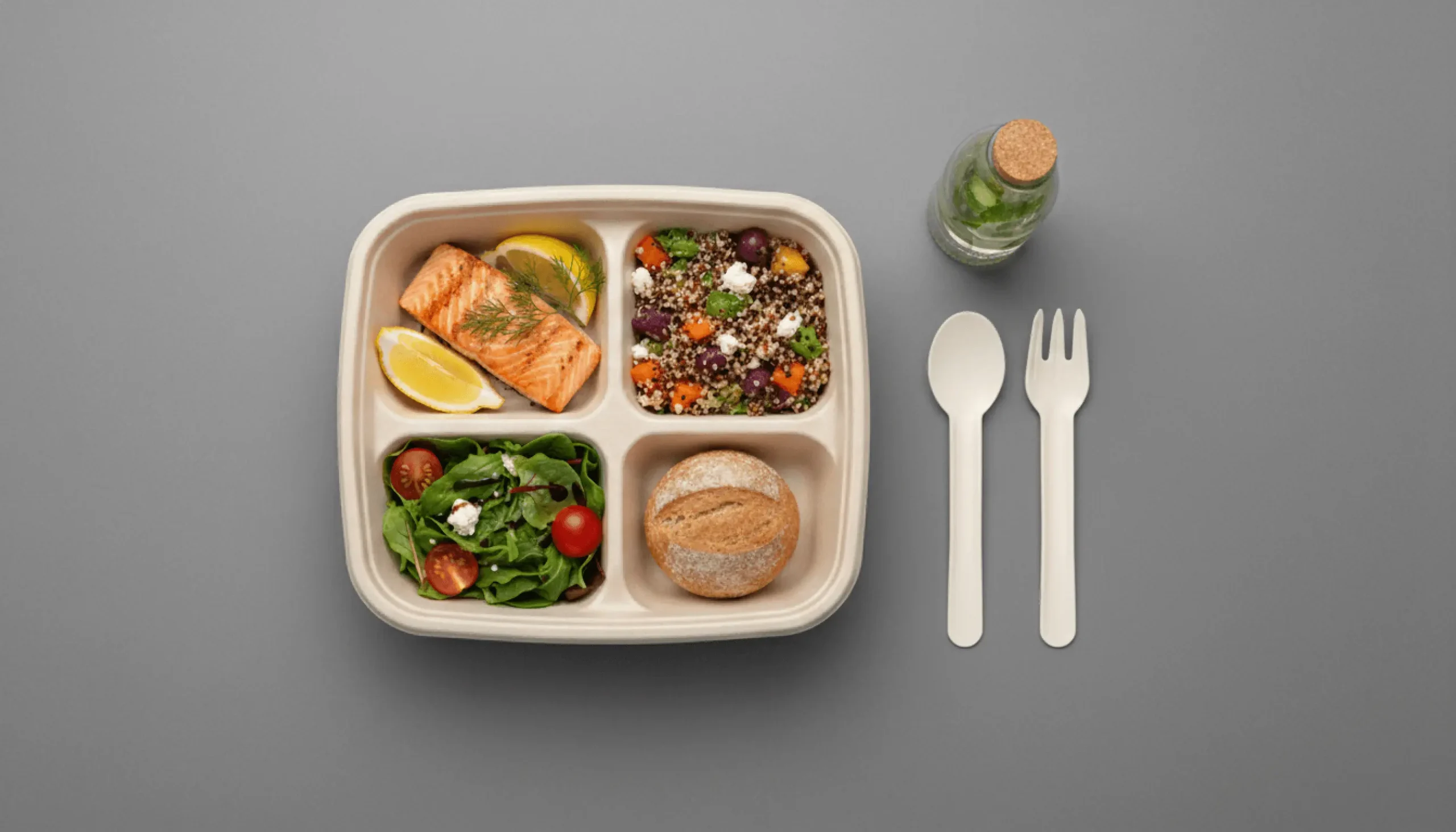
Bagasse is the fiber left after sugarcane is crushed for its juice, and it can be molded into plates, bowls, clamshells and cutlery. So when you replace plastic spoons, it is fair to ask whether bagasse cutlery beats paper.
This paper vs bagasse cutlery guide compares hot-food performance, grease resistance and the PFAS question, compostability, and the rules in India and the EU. We are Epherware, a paper cutlery manufacturer in Rajkot, India, so we have a side: outside claims link to their sources, and we say where bagasse is the better choice.
Key takeaways
- Bagasse is sugarcane fiber molded into shape. Like paper, it is plant fiber, not plastic, so plain bagasse cutlery is outside India’s plastic ban and the EU’s single-use plastics ban.
- Plain plant fiber absorbs grease and water, so paper and bagasse products may both carry a treatment. For decades one option was PFAS (per- and polyfluoroalkyl substances), so ask suppliers in writing what they use.
- Bagasse fiber is biodegradable, but “certified compostable” applies to the whole finished item, coatings included.
- Bagasse suits plates, bowls and clamshells. For the spoon, our 1025 GSM Classic Paper Spoon stayed rigid in 90–100°C broth for 45 minutes in an in-house test.
Paper vs bagasse cutlery: quick comparison
Paper and bagasse cutlery are both plant fiber rather than plastic; the real differences are how each is formed, how it holds up in hot liquid, and what gives it grease and water resistance.
| Factor | Paper cutlery | Bagasse cutlery |
|---|---|---|
| Raw material | Paper layers pressed into shape. Ours: 9 layers of virgin, food-grade paper at 1025 GSM (grams per square meter). | Sugarcane fiber left after juice extraction, pulped and molded. |
| Plastic? | No, unless it has a plastic coating, lining or binder. | No, unless it has a plastic coating or lining. |
| Hot food | Ours stayed rigid in 90–100°C broth for 45 minutes (in-house test). | Depends on density and treatment; test samples in your hottest dish. |
| Grease and water | Depends on the treatment; ask what it is. | Depends on the treatment; ask what it is. |
| Feel | Smooth, splinter-free and taste-neutral (ours), 1.2 mm thick. | Varies with pulp and pressing; check samples on the lips. |
| India and EU | Outside both plastic bans without a plastic coating or lining. | Outside both plastic bans without a plastic coating or lining. |
| After use | Fiber biodegrades; compostability depends on binder and coating. | Fiber biodegrades; certified compostable only if the finished item passes. |
| Fits best | Spoons, forks and knives. | Plates, bowls, trays and clamshells. |
Weighing other options too? See our comparisons of paper vs CPLA cutlery and paper vs wood.
What is bagasse?
Bagasse is the fiber left after sugarcane is crushed in a sugar mill to extract the juice; the US EPA describes it as matted cellulose fiber residue. For tableware, the fiber is pulped, formed in a mold and pressed dry with heat, a process known as molded pulp or molded fiber.
Sugarcane bagasse cutlery uses the same molded-pulp process as bagasse plates and bowls. Paper cutlery also starts from plant cellulose but is built differently: we press 9 layers of virgin, food-grade paper into each piece at 1025 GSM.
Which handles hot, wet food better, paper or bagasse cutlery?
Neither fiber is waterproof on its own, so how paper or bagasse cutlery behaves in hot liquid depends on how densely it is formed and what treatment, if any, keeps liquid out.
In our in-house test, a 3.2 g Classic Paper Spoon sat in hot broth at 90–100°C for 45 minutes: the neck stayed rigid, the surface did not fur or delaminate, and there was no taste transfer (see our 45-minute hot-soup test).
We have not run that test on bagasse cutlery, so test any bagasse sample the same way: leave it in your hottest dal or soup for your longest dining time, then check the neck, the feel on your lips and the taste.
Does bagasse contain PFAS?
Bagasse fiber itself contains no PFAS, but fiber food-contact products, molded or paper, can be treated with PFAS to resist grease and water, so the answer depends on the product. PFAS have been used in food-contact paper and paperboard for decades because they resist both moisture and grease; a 2021 review found that the alternatives involve trade-offs, from plastic laminates that are neither compostable nor recyclable to starch and similar coatings that resist oil but not moisture.
Testing has found PFAS-related chemicals in fiber tableware. A 2016 study of 94 food-contact materials measured fluorotelomer alcohols in “eco-friendly” paper tableware at a median 2,990 ng/g and found they could migrate from paper bowls into food simulants. A 2022 analysis estimated that polymeric PFAS were used in about 2% of food packaging in the US and Canada, and concluded that most food packaging does not need PFAS.
Rules are tightening:
- United States. The FDA announced on 28 February 2024 that PFAS grease-proofing substances are no longer being sold for food-contact use in the US market.
- Washington state. Plant-fiber packaging with intentionally added PFAS is banned: plates since February 2023, and bowls, flat serviceware and clamshells since May 2024.
- Certification. Since 1 January 2020, BPI (Biodegradable Products Institute) has refused to certify items with intentionally added fluorinated chemicals and requires total organic fluorine under 100 ppm.
- European Union. From 12 August 2026, the Packaging Regulation limits PFAS in food-contact packaging to 25 ppb for any single PFAS, 250 ppb for the sum and 50 ppm in total. That covers bagasse takeaway boxes, and plates and cups filled at the point of sale, but the regulation lists disposable cutlery as not packaging.
Whether you are comparing paper suppliers or bagasse cutlery manufacturers in India, ask in writing what gives each product its grease and water resistance and whether any PFAS are intentionally added. Our supplier checklist lists the follow-up questions.
Is bagasse cutlery allowed in India and the EU?
Yes: bagasse is plant fiber, not plastic, so plain bagasse cutlery is outside India’s ban on single-use plastic cutlery and the EU’s single-use plastics ban, though a plastic coating or lining changes that.
India’s ban, in force since 1 July 2022, covers single-use plastic items such as cutlery, plates and cups. Ask any fiber supplier about coatings: Maharashtra, for example, bans plastic-coated or laminated paper disposables.
In the EU, the Commission’s guidelines put cutlery made entirely of natural polymers that are not chemically modified outside the ban, and items with a plastic lining or coating inside it. A bio-based lining such as PLA still counts, because the directive treats bio-based plastics as plastic.
When is bagasse the better choice?
Bagasse is the better choice for plates, bowls, trays and clamshells, where molded fiber gives you a rigid container in one piece:
- Meal containers. Compartment trays and clamshells keep rice, dal and sabzi apart in one piece.
- One-material kits. If every item in your kit must be molded fiber from one supplier, bagasse cutlery keeps it simple.
- A sample that passes. If a bagasse spoon survives your hottest-dish test and its treatment is documented, it is a fair choice.
For most kitchens we suggest bagasse for the box and paper for the spoon: containers benefit from molded fiber’s rigidity, while a spoon needs a slim neck that stays stiff in hot liquid and smooth on the lips, which is what dense pressed paper is built for.
Frequently Asked Questions
Is bagasse compostable?
It can be, but “compostable” is a property of the finished item, not just the fiber. Standards such as EN 13432 and ASTM D6400 test the whole product, coatings and additives included, and BPI will not certify items with intentionally added fluorinated chemicals. Industrial certification does not prove home compostability: the European Commission says passing industrial standards does not mean an item will decompose at home.
Is bagasse biodegradable?
Yes, the fiber is. Bagasse is cellulose fiber from sugarcane, and EN 13432, the main European compostability standard, exempts materials of natural origin from its biodegradation test. Coatings, linings and additives are a separate question, so a coated bagasse item is only as biodegradable as its least degradable layer. Ask what, if anything, is applied to the surface.
Does bagasse tableware contain PFAS?
Not necessarily. PFAS are not part of sugarcane fiber; they enter molded fiber and paper products when added for grease and water resistance. Studies have found PFAS-related chemicals in some fiber tableware, and the US FDA says PFAS grease-proofing agents are no longer sold for food contact in the US. Ask your supplier in writing what provides the resistance.
Is bagasse cutlery allowed under India’s plastic ban?
Yes. India’s ban, in force since 1 July 2022, covers single-use plastic items such as cutlery, and bagasse is plant fiber, not plastic. A plastic coating or lining is a different matter, so ask your supplier what, if anything, is applied to the surface. The same check applies to paper cutlery.
Is bagasse or paper better for food delivery?
For most delivery kitchens, use both: bagasse for boxes, bowls and clamshells, and paper for the spoon, fork and knife. Molded fiber makes rigid containers, while dense pressed paper is designed for slim cutlery that stays stiff in hot food. Test your exact dishes at your longest delivery and dining time before ordering in bulk.
Sources
- US EPA — AP-42 Section 1.8: Bagasse Combustion in Sugar Mills
- Comprehensive Reviews in Food Science and Food Safety — PFAS and their alternatives in paper food packaging (Glenn et al., 2021)
- Environmental Science & Technology — Fluorotelomer alcohols in eco-friendly paper-made food-contact materials (Yuan et al., 2016)
- Environmental Science: Processes & Impacts — PFASs in consumer food packaging in the U.S. and Canada (Minet et al., 2022)
- US FDA — PFAS used in grease-proofing agents for food packaging no longer being sold in the U.S. (28 February 2024)
- Washington State Department of Ecology — PFAS in food packaging
- BPI — Fluorinated chemicals
- EUR-Lex — Regulation (EU) 2025/40 on packaging and packaging waste
- EUR-Lex — Directive (EU) 2019/904 on single-use plastics
- EUR-Lex — Commission guidelines on single-use plastic products (2021/C 216/01)
- EUR-Lex — EU policy framework on biobased, biodegradable and compostable plastics, COM(2022) 682
- TÜV AUSTRIA — OK compost INDUSTRIAL & similar standards
- Gazette of India — Plastic Waste Management (Amendment) Rules, 2021
- Government of Maharashtra — Single-use plastic amendment notification, 15 July 2022
Test paper and bagasse side by side
Pack your next test order with a bagasse box and our Classic Paper Spoon, then leave the spoon in your hottest dish for your longest dining time. We send free sample kits to qualified businesses, such as distributors, QSRs (quick-service restaurants) and HORECA (hotel, restaurant and catering) buyers, on request from a business email.