


Best Cutlery for Cloud Kitchens: What Survives 40 Minutes in the Bag

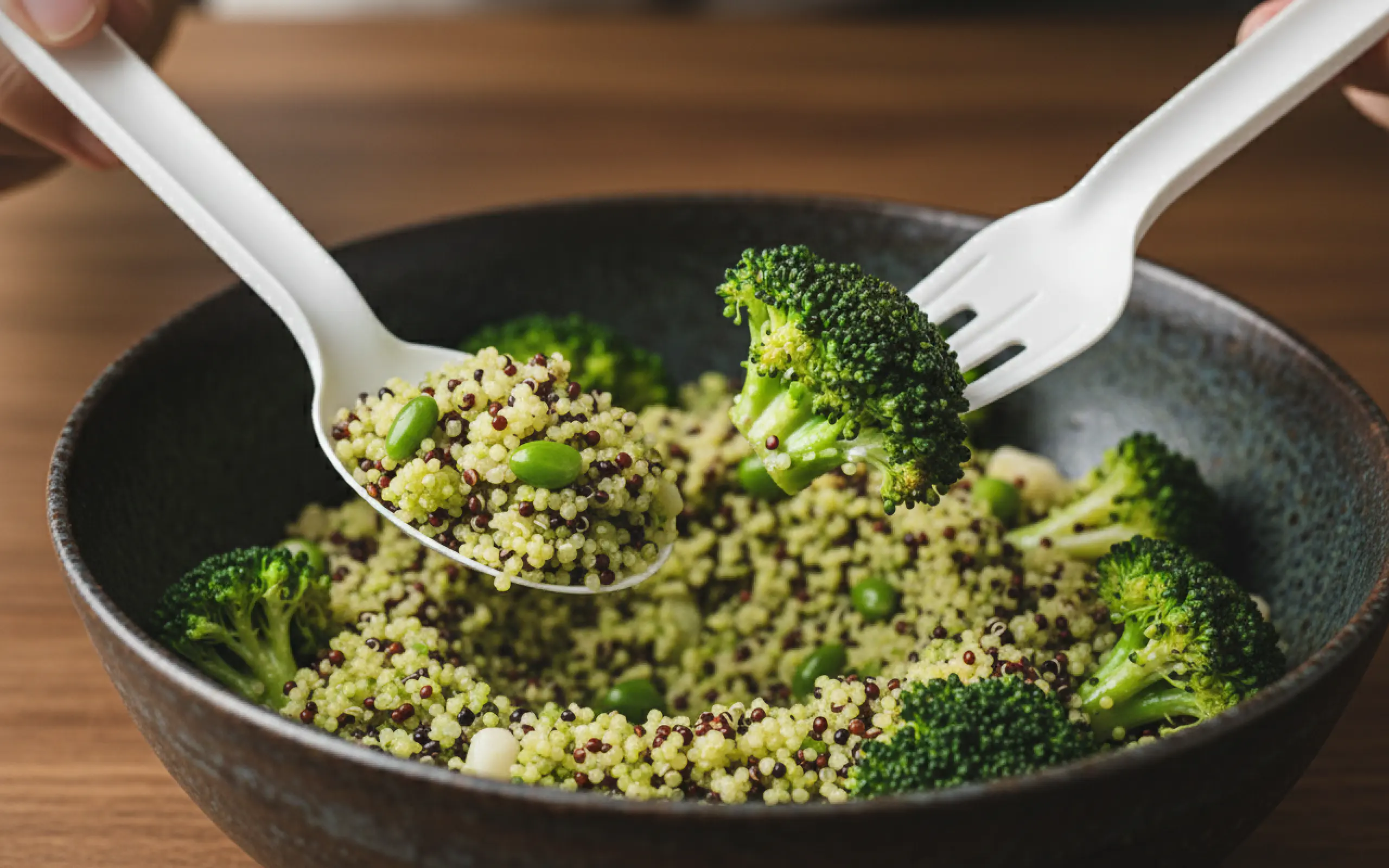
Choosing cutlery for cloud kitchens comes down to one uncomfortable fact: in delivery, the spoon is sealed in with hot, steaming food through packing, rider pickup and the ride, which can add up to 30–45 minutes or more, before anyone uses it. It is also the last thing your customer touches before rating the order on Zomato or Swiggy. A spoon that arrives soft, bent or splintered ends up in the review, not just the bin.
We are Epherware, a paper cutlery manufacturer in Rajkot, India. Below: what disposable cutlery for food delivery must survive, which piece suits which dish, the plastic ban, cost per order, storage, branding and a 40-minute test to run on samples, plus where paper is the wrong choice.
Key takeaways
- Delivery cutlery fails from heat, trapped steam and time acting together, so ask suppliers for GSM and layer count, not just an eco-friendly label.
- Match the piece to the dish: a full-size spoon for dal, curry, soup and biryani, a fork for pasta and salads, a dessert spoon for sweets, often nothing for pizza and rolls.
- Plastic spoons, forks and knives have been banned in India since July 1, 2022, including their use.
- Cut cost per order by packing cutlery only when the customer asks, and stock by formula, not guesswork.
What must cutlery for cloud kitchens survive?
Cutlery for cloud kitchens must survive heat, trapped steam and time together, plus oily gravies and a bumpy ride, and still feel firm and clean when the customer opens the bag.
- Heat. Dal, sambar, curries and soups go into the container straight off the flame, and the spoon is packed right beside them.
- Steam. A sealed container traps steam that condenses on lids and pouches, so even a spoon that never touches the food sits in warm, damp air.
- Time. Kitchen handover, rider wait and the ride all add minutes before the first bite, and slow eaters add more.
- Oil and transit. Gravies coat the spoon, and the kit gets squeezed between containers, so a thin handle can arrive bent.
Low-density paper struggles here. Generic paper spoons are typically 600–800 GSM (grams per square meter, a measure of how much fiber is packed in) with 3–4 layers, often of recycled pulp, and their air gaps pull in hot liquid. We press our cutlery from 9 layers of virgin, long-fiber, food-grade paper compressed to 1025 GSM and 1.2 mm thick, which is what separates the best disposable spoons for delivery from the ones that end up in reviews.
In our in-house test, the Classic Paper Spoon sat in hot broth kept at 90–100°C for 45 minutes: the neck stayed rigid, the surface did not fur or delaminate, and there was no taste transfer. The full method and results are on our blog.
Which cutlery suits which delivery dish?
Send a full-size spoon with anything wet or rice-based, a fork with pasta and salads, a small dessert spoon with sweets, and often no cutlery at all with food eaten by hand.
| Dish type | Best piece | Why it works |
|---|---|---|
| Dal, curry, sambar, soup | Classic Paper Spoon (158 mm, 36 mm wide, 12 mm deep, 3.2 g) | The deep bowl holds gravy, and it is the piece we put through our 45-minute hot-broth test. |
| Biryani, pulao, fried rice | Classic Paper Spoon, plus the Precision Paper Fork for chunky pieces | The wide bowl scoops rice; the fork handles chicken, paneer or vegetables. |
| Pasta, noodles, salads | Precision Paper Fork (158 mm, 31 mm wide, 3.2 g) | Tines grip pasta and leaves, and the long handle keeps fingers out of the sauce. |
| Desserts: ice cream cups, rasmalai, shrikhand | Dessert Paper Spoon (95 mm, 1.7 g) | Sized for small portions; freezer safe and does not become brittle. For hot gulab jamun in syrup, send the Classic Paper Spoon. |
| Pizza, burgers, rolls, wraps | Usually none; on request, the Serrated Paper Knife and Precision Paper Fork | Hand-held food rarely needs cutlery. The knife suits soft to medium-texture food and light cutting or spreading. |
For combo meals and corporate boxes, the Complete Cutlery Kit packs a spoon, fork, knife, dessert spoon and paper napkin together, and can carry your logo.
Is paper cutlery allowed under India’s plastic ban?
Yes. Paper cutlery is not on India’s banned list, which covers single-use plastic forks, spoons and knives, along with plates, cups, straws, trays and stirrers, and has applied since July 1, 2022 (Ministry of Environment explainer on PIB). Choose paper cutlery without plastic coating or lamination: Maharashtra also bans plastic-coated paper disposables.
The ban covers manufacture, import, stocking, distribution, sale and use, so a plastic spoon in a delivery bag is a problem for the kitchen that packed it. Our cutlery is pressed from 9 layers of food-grade paper, with no wood mix. Our plastic ban compliance guide covers the rules and a checklist for your kitchen.
How do you work out cutlery cost per order?
Cutlery cost per order is the cost of the pieces in your kit multiplied by the share of orders you actually send it with, so the simplest way to cut it is to pack cutlery only when the customer asks.
The formula
Cutlery cost per order = (pieces per kit × price per piece) × (orders that request cutlery ÷ total orders)
- Price the whole kit: spoon, fork, napkin and pouch.
- Count failures too: a refund or low rating caused by a soggy spoon belongs in the cost of the cheaper spoon.
- Compare suppliers per successful order, not per piece.
Asking first is backed by data. Zomato said that when it surveyed thousands of its customers, more than 90% said they did not really need plastic cutlery with their orders, and in August 2021 it made cutlery opt-in, so customers have to request it (Zomato’s announcement). In the same announcement, Zomato estimated the change would save its restaurant partners ₹2–5 per order. Platform settings change, so check how cutlery requests show on your order tickets on every app, and train packers to follow them.
Cutlery sits on the same cloud kitchen packaging material list as containers and bags, but it is the only item the customer puts in their mouth. For what drives the price of paper cutlery, see our paper cutlery price guide.
How should a cloud kitchen store paper cutlery?
Keep paper cutlery sealed in its carton in a cool, dry place away from the cooking line; stored that way, our cutlery has a shelf life of 2 years.
- It is light. A Classic Paper Spoon weighs 3.2 g, so 1,000 of them weigh about 3.2 kg.
- It packs densely. Spoons, forks and knives come 2,000 to a carton and dessert spoons 5,000 to a carton; ask us for carton dimensions.
- Keep it away from steam. Store cartons off the floor, away from the dishwashing area, tandoor and fryer, with your other cloud kitchen packaging items.
- Rotate stock. Open one carton at a time and use the oldest first.
Should cloud kitchens use branded cutlery?
Yes, once you have steady repeat customers: branded cutlery puts your logo in their hand at the exact moment they judge the meal.
We print logos on the handle with vegetable-based, food-safe ink, or brand the paper wrapper or pouch, and you can upload your logo on our product page for a free preview. Custom-branded orders have a minimum order quantity (MOQ) of 50,000 pieces per item and take 15–20 days from artwork approval. Our guide to custom-branded paper cutlery covers artwork and lead times.
Still testing your menu? Start with standard white cutlery: the minimum order is one carton (2,000 pieces), and stock orders are dispatched within 48 hours.
How do you run a 40-minute delivery simulation test?
Pack your hottest, oiliest dishes exactly as you would for a real order, leave them sealed in a delivery bag with the cutlery for 40 minutes, then eat a full portion; it tells you more than any spec sheet.
- Pick three dishes. Your hottest gravy (dal makhani or sambar), a rice dish such as biryani, and your best-selling dessert.
- Pack them hot. Straight from the line, in your normal containers, with the cutlery in the pouch you actually use.
- Seal and wait 40 minutes. Use a closed delivery bag. If your typical delivery takes longer, use that time plus 10 minutes.
- Inspect before eating. Is the cutlery dry, straight and odor-free? Is the pouch damp?
- Eat a full portion. Scoop from the bottom of the container, lift a heavy piece of paneer or chicken, and watch the neck, where the handle meets the bowl.
- Run the slow-eater check. Leave the spoon in the gravy for another 10 minutes, then check for softening, a fuzzy surface or any taste.
- Score side by side. Rate each sample out of 5 for rigidity, surface, taste and look, and ask two staff who did not pack the order to score it too.
When is paper cutlery not the right choice for delivery?
Paper cutlery is not the right choice when customers will reheat food with the cutlery inside, when a dish needs real cutting, or when the customer never asked for cutlery.
- Microwave reheating. Our cutlery is designed for serving, not cooking, and is not recommended for the microwave.
- Tough cuts. The Serrated Paper Knife is made for soft to medium-texture food and light cutting or spreading, not bone-in meat or thick steaks.
- Orders that did not ask. A customer eating with their own steel spoon at home needs no disposable one.
- Very long holds. Our in-house test covers 45 minutes in 90–100°C broth. If food sits for hours, such as party orders, test that scenario first.
Frequently Asked Questions
What cutlery do cloud kitchens use after the plastic ban?
The common alternatives for cloud kitchen delivery are paper, wooden and edible cutlery, since India banned single-use plastic spoons, forks and knives from July 1, 2022. For hot, wet delivery food, high-density paper is the practical choice: smooth, splinter-free and taste-neutral. Our 1025 GSM, 9-layer Classic Paper Spoon stayed rigid for 45 minutes in 90–100°C broth in our in-house test.
How do I stop paper spoons going soggy in delivery?
Buy density, then pack smart. Ask suppliers for GSM and layer count: generic paper spoons are typically 600–800 GSM with 3–4 layers, while ours are 1025 GSM with 9 layers of virgin fiber. Keep the cutlery pouch away from hot lids where steam condenses, match the spoon to the dish, and run a 40-minute test with your hottest gravy.
How much cutlery should a cloud kitchen stock?
Use this formula: stock = daily orders that request cutlery × pieces per order × days of cover. Days of cover is your reorder gap plus a safety margin for transit. Example: 150 cutlery orders a day × 1 spoon × 14 days = 2,100 spoons. Our stock orders are dispatched within 48 hours, and the minimum for standard white cutlery is one carton of 2,000 spoons.
Is paper cutlery more expensive than wooden?
It depends on grade and order size, so compare like for like. A dense 1025 GSM, 9-layer paper spoon uses more fiber than a thin 600–800 GSM one, and price follows material. For delivery, the useful number is cost per successful order: a cheaper spoon that splinters, bends or tastes woody can cost you a refund or a rating.
Can I put my logo on delivery cutlery?
Yes. We print your logo on the handle with vegetable-based, food-safe ink, or brand the paper wrapper or pouch, and our Complete Cutlery Kit can carry your logo too. Custom-branded orders start at 50,000 pieces per item and take 15–20 days from artwork approval. You can upload your logo on our product page for a free preview first.
Sources
- Press Information Bureau (Ministry of Environment, Forest and Climate Change) — Ban on Single Use Plastic in India: Step towards Clean India, Green India
- Zomato — Say no to cutlery in food delivery (August 30, 2021)
Test it in your own delivery bag
Run the 40-minute simulation with your hottest dal and your oiliest gravy before you switch. We send free sample kits to qualified food businesses; request yours with your business email.